

What GA4 taught brands about owning their analytics stack
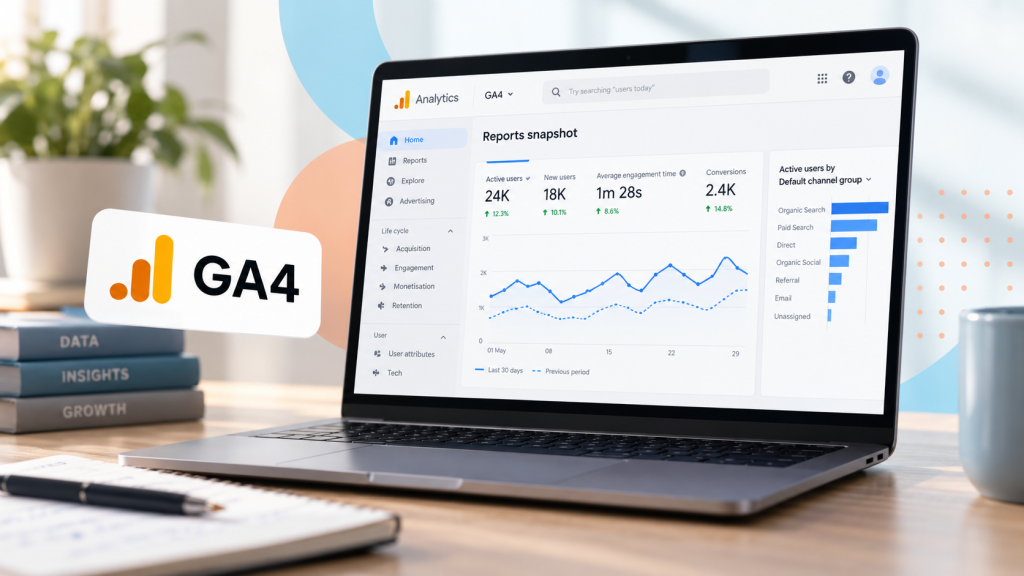
The move from Universal Analytics to Google Analytics 4 was more than a platform change for many brands. It was a wake-up call. What initially looked like a technical migration quickly exposed a much bigger issue: too many businesses had been relying on an analytics setup they did not fully understand, control or trust.
GA4 forced brands to rethink how they collect, manage and interpret data. It changed reporting structures, removed familiar metrics, introduced event-based tracking and placed greater emphasis on privacy, consent and modelling. For marketers used to more familiar reporting interfaces, the shift felt disruptive. Beneath the frustration, however, sat an important lesson: analytics is no longer something brands can afford to leave on autopilot.
For years, many businesses treated analytics as a default reporting tool rather than a strategic data asset. It was installed, checked periodically and used to answer surface-level questions such as how many users visited the website, where they came from and whether they converted. The problem was that the system behind those numbers was often neglected. Tracking had been added over time, goals were duplicated or outdated, UTM structures were inconsistent and reporting relied heavily on platform defaults.
GA4 exposed these weaknesses. Because it uses an event-based model, brands had to define what mattered. Pageviews alone were no longer enough. Businesses needed to decide which actions genuinely indicated intent, engagement or commercial value. A form submission, product view, video interaction, scroll depth, outbound click or checkout step could all be useful, but only if the tracking strategy was built with purpose.
Analytics ownership starts long before anyone opens a dashboard
One of GA4’s biggest lessons is that good analytics starts with measurement planning. Businesses do not need every available event, and they do not benefit from collecting data without a clear purpose. They need a measurement framework that reflects how the business actually works.
That means starting with questions such as: what are we trying to achieve? Which user actions matter most? Which stages of the customer journey are commercially significant? What decisions do we want the data to help us make?
Once those questions are clear, tracking becomes more meaningful. Instead of simply capturing activity because the platform makes it possible, the business can build a structure that maps back to goals. That often means defining a small set of genuinely useful measurement priorities rather than collecting everything indiscriminately.
This is where many older analytics setups began to show strain. Universal Analytics allowed businesses to get by with broad traffic reporting for a long time. GA4 made that less comfortable. Its structure encourages businesses to think more deliberately about the difference between traffic, engagement, intent and conversion.
The most important thing GA4 taught brands is that analytics is not the same as reporting. Reporting shows numbers. Analytics starts with deciding which numbers matter and why.
Six practical lessons many businesses were forced to confront
The transition to GA4 revealed common weaknesses across marketing teams, agencies and internal reporting processes. It also clarified what a stronger analytics stack should look like.
The move to GA4 highlighted the same issues for many organisations.
Default setup is not strategy
Installing a platform does not automatically create a useful measurement system.
- Important interactions can go untracked
- Reports can be technically correct but commercially weak
- Key decisions may still rest on incomplete data
Definitions need governance
Teams need shared definitions for terms such as conversion, qualified lead, assisted sale or engaged user.
- Avoid different departments using different numbers
- Reduce reporting confusion
- Improve confidence in performance discussions
Events should reflect intent
Not every click deserves the same attention. Measurement should distinguish interest from real commercial progress.
- Track actions that indicate genuine movement
- Separate curiosity from commitment
- Prioritise high-value signals
First-party data matters more
As privacy rules tighten and third-party signals weaken, brands need stronger ownership of their own customer data.
- Capture data responsibly
- Connect behaviour to known business outcomes
- Rely less on borrowed platform visibility
Analytics is cross-functional
Good measurement involves marketing, development, leadership and often sales or operations too.
- Implementation affects reporting quality
- Business context affects interpretation
- Ownership should not sit in one silo
Tool choice is only one layer
GA4 is one part of a stack, not the whole stack.
- Tag management still matters
- Consent and privacy still matter
- Dashboards, CRM and ad platforms still shape the picture
Owning the analytics stack does not mean replacing Google. It means understanding the system around it.
Owning the analytics stack does not mean rejecting GA4. It remains a powerful platform, especially when connected correctly with Google Ads, BigQuery, consent management tools and the wider website setup.
Ownership means understanding where your data comes from, how it is processed, what each metric really means and where the limitations sit. It means knowing which tags fire, which events matter, which conversions feed ad platforms, which filters or exclusions are in place and how dashboards are constructed.
It also means documenting the rules. Teams should know what a conversion is, how channels are classified, what naming conventions are used and what to do when the site or campaigns change. Without that discipline, analytics becomes increasingly fragile as the business grows.
For businesses investing across paid media, SEO, email, CRO and ecommerce, this matters even more. Each platform has its own attribution model, conversion logic and reporting bias. When businesses treat one platform as the unquestioned source of truth, they can end up making budget decisions based on incomplete or distorted context.
A well-owned analytics stack is built in layers, not in one dashboard.
The foundation is strategic clarity. The business must decide what success looks like, which customer actions matter and which commercial questions the analytics stack is meant to answer.
This includes event planning, conversion definitions, naming conventions, UTM standards, consent logic and an agreed approach to what should and should not be tracked.
Tags, triggers, data layers, forms, ecommerce tracking, cross-domain logic and QA all sit here. Good intentions at strategy level mean little if the implementation is incomplete or inconsistent.
Once data is collected, businesses need sensible reporting frameworks, dashboards and analysis methods that reflect the real customer journey rather than platform convenience alone.
The top of the stack is action. The value of analytics lies in better decisions around channel investment, website improvements, conversion priorities, audience development and growth strategy.
GA4 pushed brands away from isolated sessions and towards connected behaviour
One of the most useful shifts encouraged by GA4 is a move away from obsessing over isolated sessions and towards understanding behaviour across a broader journey. For many websites, especially ecommerce and lead generation sites, value does not happen in one clean visit.
A user may arrive through organic search, return later through a paid ad, browse several service pages, sign up to an email list and only convert after another visit days or weeks later. Analysing that behaviour properly requires more than simple last-click thinking.
GA4’s event model can support a more useful picture when it is implemented well. Brands can track meaningful interactions throughout the journey and ask better questions: which content introduces qualified users, which actions indicate rising intent, which paths tend to precede conversion and where friction causes drop-off?
That way of thinking connects well with conversion rate optimisation and better digital strategy more broadly. Instead of treating analytics as a backwards-looking traffic report, it becomes a tool for improving the real customer experience.
The important question is rarely “how many visits?” and more often “what happened between first contact and conversion?”
Track how users first arrive and which topics, campaigns or audiences introduce relevant visitors.
Measure whether users consume useful content, explore relevant pages or interact in ways that indicate genuine interest.
Identify stronger buying or enquiry signals such as quote requests, checkout progress, phone clicks or key form steps.
Connect conversion and commercial results back to the journey so the business can understand which activity actually contributes.
Modern analytics has to work within a messier environment
Another major lesson from the GA4 era is that analytics no longer exists in a clean technical environment. Privacy regulation, browser restrictions, consent choices, ad-platform changes and growing use of modelling all affect what can and cannot be observed.
That means marketers cannot assume perfect visibility. Instead, they need a more mature understanding of uncertainty. Some reporting is sampled. Some sessions are unattributed. Some users do not consent to tracking. Some conversions are modelled. None of this means analytics is useless. It means businesses need to understand how the system works and interpret results with the right level of caution.
This is one reason first-party data becomes increasingly important. The more a brand can responsibly collect and connect its own useful customer data, the less dependent it becomes on a single third-party platform’s view of the world. Stronger ownership of forms, CRM records, purchase data and consented behavioural information helps create a more resilient measurement framework.
It also places more importance on implementation standards, consent-aware tracking and collaboration between marketing and development teams. Privacy and performance are no longer separate conversations from analytics. They are part of the same system.
Four things brands need to stay honest about in a post-UA world.
Important user actions, form events or ecommerce steps should not be assumed. They need to be deliberately implemented and tested.
Consent choices and privacy restrictions change what can be collected. Teams need to account for those limits rather than ignore them.
Every report depends on definitions, attribution logic and business context. Dashboards alone do not provide interpretation.
Analytics becomes more useful when every key metric connects clearly to a decision, priority or improvement opportunity.
A strong analytics stack is governed, documented and maintained
The businesses that benefited most from the transition to GA4 were often the ones that used it as an opportunity to audit, simplify and strengthen the wider measurement environment. They reviewed old tracking, removed redundant goals, defined meaningful conversions, clarified campaign naming and rebuilt reporting with the business in mind.
They also recognised that analytics is not a one-off implementation. Websites evolve, campaigns change, forms get redesigned, products move, consent tools are updated and customer journeys shift. Without regular review, even a good analytics setup gradually drifts out of alignment with the business it is meant to describe.
Good ownership therefore includes documentation, governance and ongoing QA. Someone should know how the stack works, where the dependencies sit and what needs to be checked when the website or marketing strategy changes.
This is particularly important for businesses relying on multiple channels. A mature stack makes it easier to understand how SEO, paid media, content, email and onsite improvements contribute together, rather than judging each channel in isolation.
Owning the stack usually means moving away from convenience and towards discipline.
Analytics works best when the business shares one version of reality
There is also a wider organisational lesson in all of this. Analytics should not sit in a silo. Marketing, development, leadership and finance often all have a stake in how performance is measured. When different teams trust different numbers, decision-making becomes fragmented.
A well-owned analytics stack creates clearer definitions, shared dashboards and stronger confidence in performance discussions. It helps businesses move beyond reporting arguments and towards better commercial decisions.
That does not mean every team must look at exactly the same metrics in exactly the same way. Different functions will still have different priorities. But there should be a shared understanding of the core measurements, the important caveats and the logic underneath the reporting.
This is another reason GA4 mattered. It disrupted routines enough to expose how many organisations were relying on habit rather than understanding. In doing so, it created an opportunity for brands to ask better questions about what their analytics stack should actually do for them.
GA4 may have been disruptive, but it gave brands an important chance to mature
The brands that take ownership of their analytics stack will be better prepared for what comes next. Whether that involves further privacy changes, AI-led reporting, server-side measurement, media mix modelling or deeper CRM integration, the principle remains the same: data should be intentional, accessible and accountable.
GA4 may have been a frustrating transition, but it also encouraged a healthier question than many businesses had been asking before: not simply “what does the platform report?” but “do we understand our measurement system well enough to trust and use it?”
In the long run, that shift matters more than the interface. The businesses that understand and own their analytics stack will make better decisions, spend more efficiently and build stronger digital growth over time.
Brands do not gain better insight by collecting more data alone. They gain it by owning the system that turns data into trustworthy decisions.
GA4 exposed weaknesses, but it also gave businesses a useful opportunity: to stop treating analytics as a background utility and start treating it as a strategic part of how growth is measured, interpreted and improved.
Owning the analytics stack usually involves more than the reporting platform itself. It sits across data collection, campaign governance, website behaviour, channel analysis and the decisions businesses make from the resulting insight.